
Basic detection, $200–$400
Straightforward jobs: a limited pipe run, good access, the leak confirmed and marked.
A leak you cannot see is still on the meter, still under the slab, still soaking the wall cavity. We find them with listening gear, thermal imaging and pressure testing, so the repair needs one small hole in the right place, not three big ones in guesses.
A hidden leak cannot help giving itself away three times over. Escaping water under pressure sings at frequencies acoustic gear can chase along a pipe run; it changes the temperature of whatever it soaks, which thermal imaging paints in false colour through wall sheeting and slab surfaces; and it bleeds pressure from whichever isolated section of pipework it lives on, which a gauge catches cold. One signal suggests; three signals triangulate.
That triangulation is what you are actually buying. Where the readings converge, we mark the floor, and in Balmain East’s renovated homes, where pipework wanders in ways no council plan ever recorded, that mark routinely sits metres from where anyone would have started digging on instinct. The difference between those two points is the difference between lifting three tiles and re-doing a bathroom.

Mature gardens and established street trees on the peninsula send roots hunting into hairline cracks in old sewer lines, a top cause of recurring blockages.
Close to the water the ground is frequently wet regardless of any plumbing fault, which removes the most obvious diagnostic anybody has. Damp subfloor, moisture in the slab edge and standing water in a trench prove nothing here.
So detection near the water leans on isolation and the meter rather than observation, and on tracer gas where a leak is genuinely hidden by ambient groundwater.
Balmain East’s original terraces still run earthenware pipework laid over a century ago, and cracked joints in that old clay are a leading cause of blockages here.
Lath and plaster, pressed metal ceilings, original tiling and heritage listings all raise the cost of being wrong. In a period home the value of precise location is not the plumbing saved, it is the finishes not destroyed.
So we locate to the smallest area the equipment will support, and where a listing is in play we document what we propose to open before anything is touched.
The peninsula’s steep run down to the harbour sends heavy-rain runoff surging through stormwater pits that choke and back up.
Sloping blocks are full of retaining structures, and pipework often runs behind or beneath them because there was nowhere else to put it. A leak in that position saturates backfill, and saturated backfill is what makes retaining walls move.
Water showing at the base of a wall is worth treating as urgent even when the volume looks trivial. The plumbing repair is small compared with what the wall costs.
A persistent sewer smell around a property with no obvious source is worth investigating properly. It usually means either a dry or failed trap, or a break in a line venting where it should not.
A smoke test finds both quickly, introduce smoke into the system and watch where it emerges. It is unglamorous, cheap, and conclusive in a way that sniffing around is not.
Corrosion works faster in humid, salt-carrying air, and the parts that fail earliest are the small ones: tap bodies, external fittings, and the connections around a hot water unit.
Balmain East sits right at the tip of the Balmain peninsula (postcode 2041), a harbourside pocket of Victorian terraces and converted warehouses stepping down steep streets to the ferry wharf. Bordering Balmain and looking across the water to the city, its ageing drainage sees everything, and we know the local ground well.
Many of the leaks we find on properties near the water are not in the pipework at all but at a fitting that has been quietly corroding in plain sight. They are also the cheapest to put right, if found before they let go.
Straightforward jobs: a limited pipe run, good access, the leak confirmed and marked.
The standard concealed-leak hunt with the full kit on site, acoustic, thermal, pressure testing.
Long pipe runs, poor access or multiple leaks add gauge-and-listen time past the first hour.
Deep slab lines and complex multi-storey tracing sit at the top of the Sydney range.
Detection tells you exactly what the repair involves, so the repair quote is built on evidence. One crew does both, no handover, no second call-out fee.
Compare it with exploratory demolition, which costs more than detection before it has even guessed right once. Figures here are indicative of the 2026 Sydney market rather than a quote from us, you get your own number as a fixed price before any work starts.

The meter test, done properly, plus your bills and history. If the evidence says no supply leak, you hear that, not a bill for finding nothing.
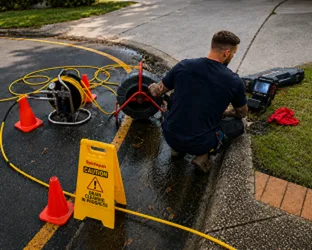
Pressure-testing the pipework in sections, hot against cold, line by line, corners the leak into one run before any listening starts.

Acoustic gear and thermal imaging along the guilty run until the readings converge. The mark on the floor is where the repair happens, centimetres, not metres.

Access exactly at the mark, the failed section repaired, pressure-tested, closed up. If the line's condition says reroute instead of repair, you get both numbers first.
Then the leak is real and already on the clock. Book the detection before it surfaces somewhere expensive.
Instruments, evidence, one precise repair: and a bill that goes back to normal.

Leave your details and our local Balmain East team will call you back fast.